Emergency Plumbing Services
Water is where it should not be. Here is what to shut off, what to check, and who to call.
Leak, clog or sewer backup? Learn what to shut off, what you can safely try, and when to stop. Then get connected with an independent local provider.
No obligation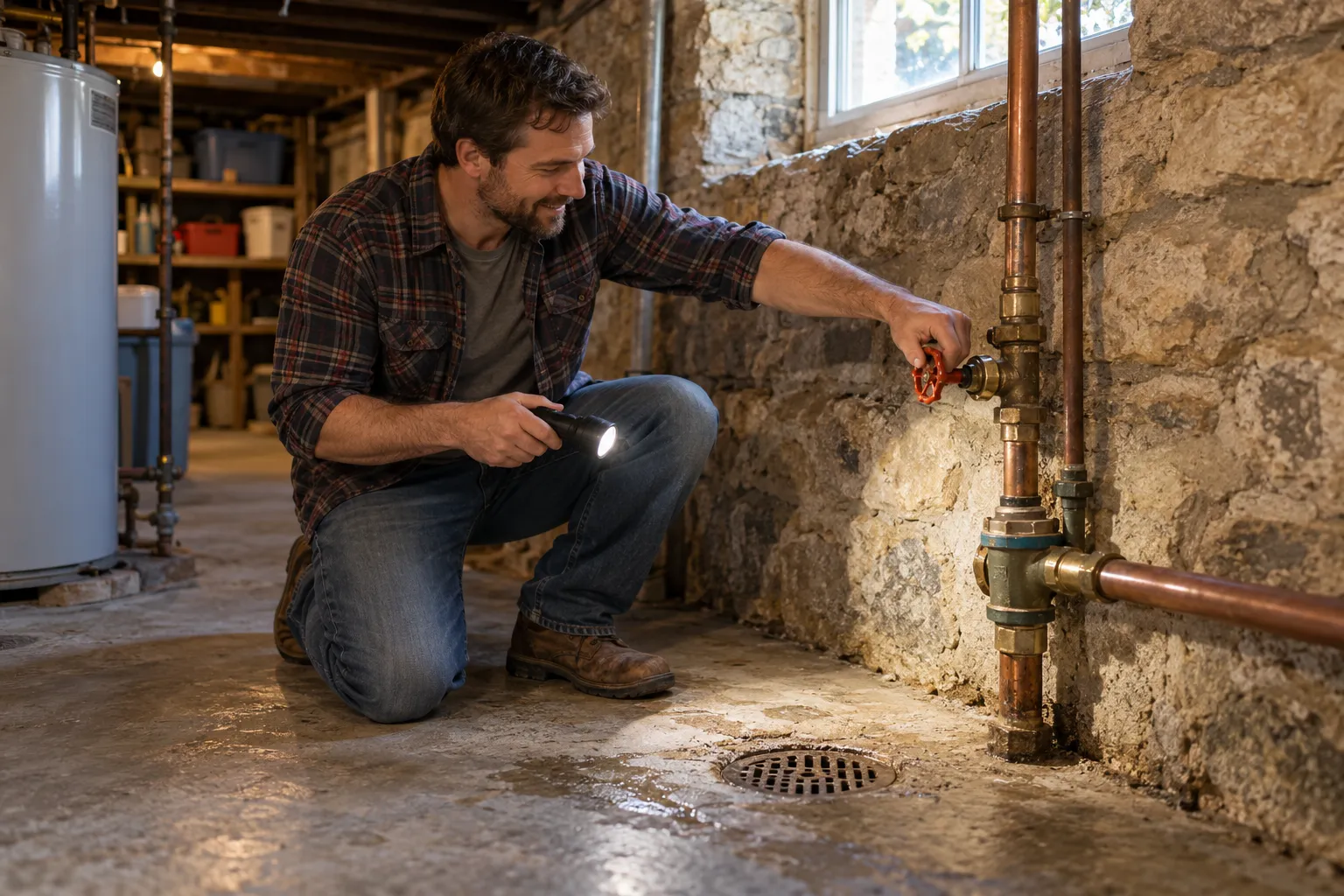
Pick the card that matches your problem. Emergency plumbing covers leaks, bursts and sudden failures. Sewer line repair covers the big pipe that carries waste out of your house. Drain cleaning covers clogs in sinks, tubs and floor drains. Not sure which one you need? Read on, or ask a provider to help sort it out.
Water is where it should not be. Here is what to shut off, what to check, and who to call.
Sewage in the basement is stressful, but a clear plan makes the next hour much easier to handle.
Know your options for a slow or blocked drain, what to try first, and when to stop.
Describe your leak, clog or backup and Pipepractice Plumbing will connect you with an independent local provider. Send a request or reach us at contact@pipepractice.world.
No obligationWe help Dublin homeowners understand their options and reach independent local plumbing providers when a pipe or drain fails.
Close the fixture valve or main shutoff and open a low faucet to drain the line.
Take photos of the damage and note what is wet. Switch off power near water.
Request a callback to check availability, or use the form to request an estimate.
Read the written quote, ask about options, then give the go-ahead when it makes sense.
Shut off the main water valve right away. Open a low faucet to drain the lines. If water is near outlets or the panel, stay clear and keep power off only if it is safe to reach. Take photos, then reach out to a local provider.
Warning signs include slow drains in several rooms, gurgling toilets, sewage smells and wet patches in the yard. If only one sink is slow, the clog is likely local. A provider can confirm with a camera inspection.
Often, yes. Try a plunger or a hand drain snake on a single sink or tub. Skip harsh chemicals. If water backs up in more than one fixture, or the clog returns, stop and ask a provider to look.
It varies by job. Typical U.S. ranges are about $100 to $400 for simple drain clearing and a few hundred dollars for many leak repairs. Sewer repair can run from about $1,000 to well over $10,000. Always get a written quote.
No. Pipepractice Plumbing is a referral service. It connects you with independent local providers, and the provider you choose does the work, sets the price and gives you the quote.
A pipe is spraying. A toilet is gurgling and the basement floor drain is bubbling. Or a sink quit draining and the smell is getting worse. Whatever it is, you want to know what to do next and who to ask.
Pipepractice Plumbing is a referral service. It connects homeowners in Dublin, PA and the Dublin area with independent local providers who handle emergency plumbing, drain clearing and sewer line repair. Pipepractice Plumbing does not send its own crews. The provider you reach does the work and gives you the quote.
Before you pick up the phone, do the safe parts yourself. Find your main water shutoff and turn it off if water is running where it should not. Stop using sinks, tubs and toilets if a drain is backing up. Move valuables off the floor. Switch off power to a flooded area only if you can reach the panel without stepping in water.
Then talk to a pro. Request a callback to check provider availability for your problem.
Would you rather write it down first? Send a request and describe what you see. Providers can often explain the likely next steps before anyone arrives.
Pipepractice Plumbing is a matching service, not a plumbing company. You describe what is going wrong. It connects you with an independent provider near you who handles that kind of job. The provider sets the price, does the work and answers for it.
Some problems fit more than one box. One slow tub is usually a drain job. Slow drains all over the house point to the main line.
You share the details by phone or by form. A provider asks a few questions about what you see, hear and smell. Many providers can respond quickly, but availability varies, so ask up front.
Once on site, the provider looks things over. For pipes you cannot see, a small camera is often used. Then the provider explains the options in plain words, such as clearing the line, repairing one section, or replacing more.
Ask for a written quote before work begins. Read it. Ask what is included and what could change the price. You can say yes, say no, or get a second opinion. Pricing comes from the provider, not from Pipepractice Plumbing.
Pipepractice Plumbing focuses on Dublin, PA and the Dublin area. Homes here put plumbing through a lot.
Winters are cold and snowy. Pipes in outside walls, crawl spaces and unheated corners of basements can crack when temperatures swing. Spring snowmelt and coastal storms push groundwater against foundations, and sump pumps and floor drains get a real workout.
Much of the housing stock is older. Stone and block foundations, full basements, multi-family buildings and Cape Cod style homes often hide long, aging pipe runs. Older drain lines can be clay, cast iron or patched over the years. Tree roots, belly sags and corrosion show up often in homes like these.
That is why local matters. A provider who works in your area has likely seen your house type, your soil and your winter damage before.
If you are not sure where to begin, request a callback to ask about provider availability near you.
Or send the details and request an estimate when you have time to write them out.
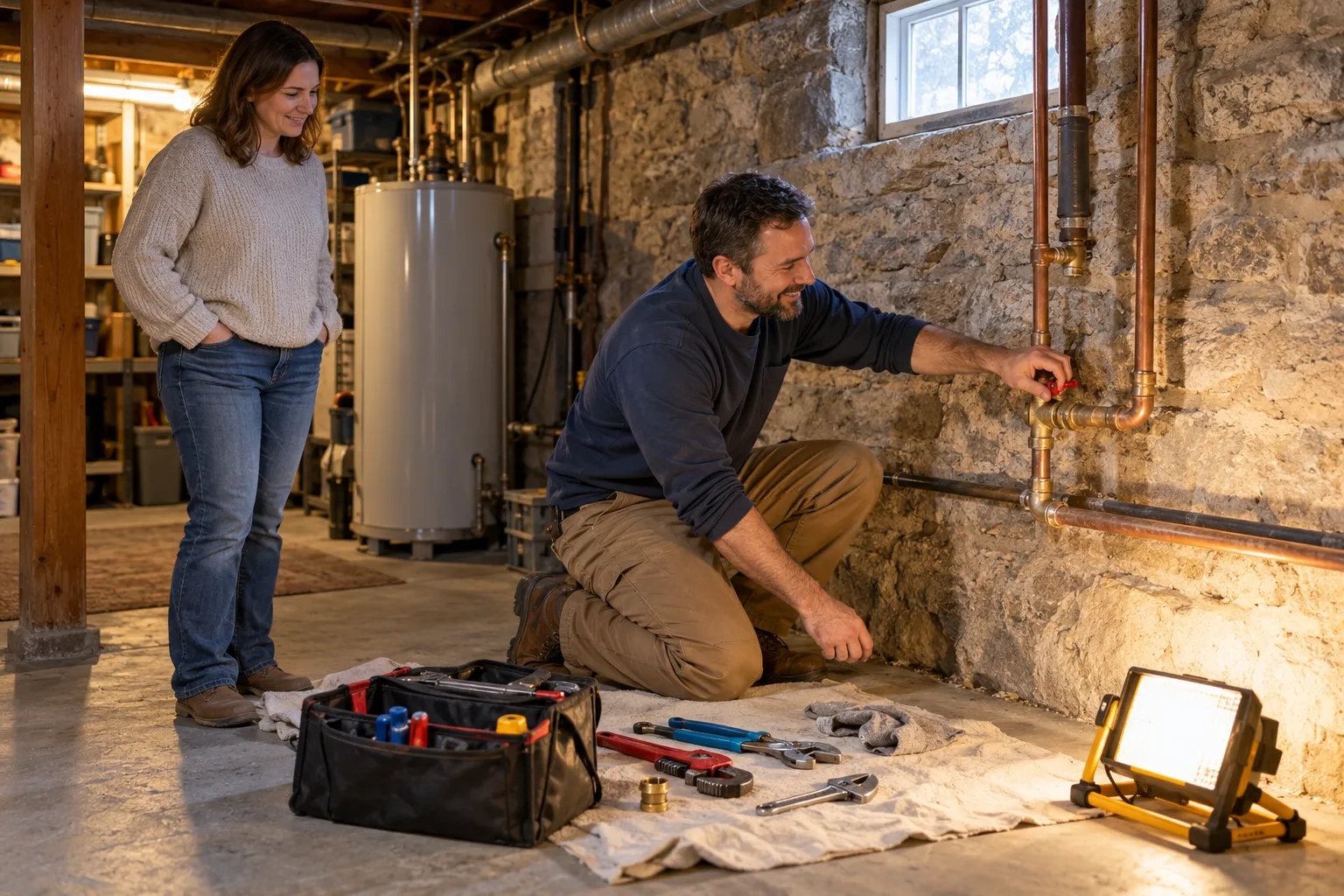
Learn where your main shutoff is before you need it. It is often near the water meter or where the line enters the basement. Turn it clockwise until it stops. Then open a faucet on the bottom floor to drain what is left in the pipes.
If a drain is backing up, hold off on flushing, laundry and dishes. Every gallon you send down has to go somewhere, and it may come up in the drain that sits closest to the floor, such as a basement shower or floor drain.
A plunger or a hand drain snake works on many sink and tub clogs. Pull out hair, wipe away the gunk and try again. Keep it simple. If one fixture clears and others stay slow, the clog is probably local.
Strong drain chemicals can harm old pipes and are risky if a provider has to work on the line later. They also splash. If a first or second attempt fails, stop there.
Stop and call a pro if you see sewage, hear gurgling from several drains, smell gas, find water near electrical gear, or cannot find the leak. Do not climb into standing water. Do not cut into pipes you cannot identify.
If a pipe is frozen but not burst, open the faucet and warm the pipe slowly with moving air. Never use an open flame. A cracked pipe can show itself only after the thaw, so watch for drips.
When a provider calls back, ask what the likely cause is, what the options are, what the quote covers and what might change it. Ask whether a camera look is recommended.
Typical U.S. ranges vary by job. Simple drain clearing often runs from about $100 to $400. An emergency visit for a leak can run a few hundred dollars, more for larger repairs. Sewer line repair can range from around $1,000 for a spot repair to well over $10,000 for replacement. Get a written quote.
Some policies may cover sudden damage, so check your policy. Providers can often help document damage for a claim. Take photos before you clean up.
Tell Pipepractice Plumbing what is going on and get pointed to an independent local provider. Keep your main shutoff location and a short description of the problem handy.
Request a callback to check provider availability in the Dublin area.
Or send a request and compare your options without any obligation.
Describe your leak, clog or backup and Pipepractice Plumbing will connect you with an independent local provider. Send a request or reach us at contact@pipepractice.world.
No obligation